NEWS

Similarity in weakly distinctive elements

Judgment of the General Court (GC) of 3 July 2024 – T‑530/23 – SANYTOL / SANITEB

 Contents

Signs differ in their strongly distinctive elements

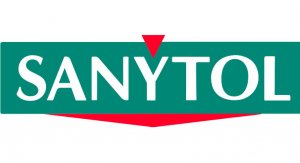
An EU tradtrade mark applicationSaniteb Logobeansprucht sought protection for hygiene and disinfection goods in Classes 5 and 10. In 2021, the owner of the EU trade mark  Sanytol Logo filed an opposition at the EUIPO, relying on a mark that is protected, among others, for hygiene and disinfection goods in Classes 3 and 5. The EUIPO and its Board of Appeal rejected the opposition. Despite the identity of the goods and the undisputed reputation of SANYTOL for disinfectants in Class 5, they found no likelihood of confusion. According to those bodies, the signs differ in their figurative elements and coincide only in the weak beginnings “sanyt”/“sanit,” which are considered weakly distinctive because of the reference to the English term “sanitary.” As a result, the different, strongly distinctive endings “eb” and “ol”—particularly in terms of conceptual meaning, since “eb” has no meaning—predominate in the comparison. The owner of SANYTOL appealed to the General Court to have the Board of Appeal’s decision set aside.

General Court: No artificial splitting of the Marks

The General Court found in favor of the applicant and overturned the Board of Appeal’s decision. A significant part of the relevant public would not split the marks into “sanyt”/“sanit” and “ol”/“eb.” This division neither corresponds to normal syllabic separation nor does the graphic design of the marks warrant such a split. Consequently, consumers do not focus primarily on “ol” or “eb” when comparing the signs.

Similarity of the signs also from a conceptual standpoint

Viewed as a whole, “SANYTOL” and “SANITEB” are more similar in word and figurative form than the EUIPO assumed. This also applies to conceptual similarity, because “sanyt” and “sanit” evoke the idea of “sanitary.” The General Court noted that, according to case law, conceptual similarity can arise where the same idea or concept is conveyed.

Overall assessment must take into account the reputation of the Mark

At the next stage of the likelihood-of-confusion analysis, it must be remembered that the similar initial parts “sanyt” and “sanit” are weak in distinctive character. In the context of the overall assessment, the enhanced distinctiveness of SANYTOL, resulting from its reputation, carries significant weight. A likelihood of confusion cannot be ruled out.

To the point

This decision demonstrates that a likelihood of confusion may, under certain circumstances, be established even where only weakly distinctive elements are similar. Here, SANYTOL’s reputation proved decisive. Moreover, the General Court reaffirmed its established principle that a mark should be dissected into separate components only if certain parts have a clear meaning, and/or if syllabic division or figurative elements naturally lead to such segmentation.

Source:
InfoCuria Case-law

MORE NEWS
AI

AI labelling under Article 50 of the EU AI Act: What applies from August 2026

The transparency obligations under Article 50 of the EU AI Act apply from 2 August 2026. However, the Regulation does not establish a general labelling obligation for all AI-assisted content.
AI / Trademark Law

AI-driven trademark abuse: Why “register first, use later” is becoming riskier

AI tools make it easier to identify unprotected brand names. For businesses, this can quickly become costly on platforms such as Amazon.

Munich Regional Court I: Google must answer for false AI responses

Munich Regional Court I prohibited Google from further disseminating false statements from an “AI Overview”. The AI response was attributed to the search engine operator as its own statement.
Trademark Law

BGH “Mehmet Efendi”: No exhaustion from placing goods on the market in Turkey – association agreement does not extend the EEA

The BGH confirms: Placing EU trade mark goods on the market in Turkey does not trigger exhaustion within the EEA. The EEC–Turkey association framework does not extend the territorial scope of exhaustion; parallel imports into the EEA can be prohibited without the proprietor’s consent.
Trademark Law

BGH “LA BIOSTHETIQUE”: German courts have jurisdiction for targeted online advertising – supplier disclosure may be disproportionate

The BGH aligns international jurisdiction for online trademark infringement with the target market: what matters is where the addressed consumers/traders are located—not the server location or the advertiser’s seat. It also held that disclosure of suppliers/prior owners may exceptionally be disproportionate where the infringement lies solely in the presentation of exhausted goods.
Trade Secrets

CJEU: Infringing “possession” covers stock held abroad—and also indirect possession

The CJEU clarifies that trade mark owners may prohibit “possession” under Art. 10(3)(b) Directive 2015/2436 even where goods are stocked in another Member State—if intended for offering/placing on the market in the protection state. “Possession” also includes indirect control (supervisory/managerial authority).

Karin Simon
Lawyer
Certified IP Lawyer

Susanne Graeser
Lawyer
Certified IP Lawyer

Uhlandstr. 2
80336 Munich
Germany

Karin Simon
Rechtsanwältin
Fachanwältin für gewerblichen Rechtsschutz

Susanne Graeser
Rechtsanwältin
Fachanwältin für gewerblichen Rechtsschutz

Uhlandstr. 2
D-80336 München