

Legally valid use
The decision of the Federal Patent Court is interesting because, on the one hand, the Federal Patent Court comments on relevant questions of use that preserves rights. On the other hand, the controversial legal concept of complex trade mark similarity is used to justify the likelihoof of confusion of the comparative marks.
Power Horse against Black Horse
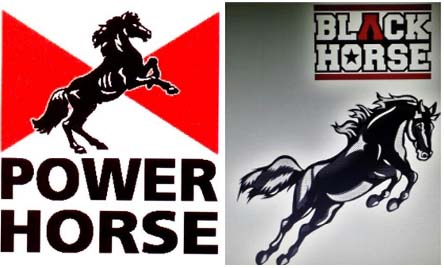
The proprietor of the earlier trade mark “POWER HORSE” has filed an opposition against the later trade mark “BLACK HORSE”. The earlier trade mark is registered, inter alia, for “non-alcoholic drinks; preparations for making beverages” in class 32. The later trade mark also claims protection for various non-alcoholic beverages in class 32. The proprietor of the earlier trade mark had to prove that its trade mark had been used to preserve rights.
Legally valid use for "caffeinated soft drinks"
The opponent submitted extensive documents showing use of the earlier trade mark “POWER HORSE” for an energy drink. The Federal Patent Court confirmed that although this does not mean that use for the generic term “non-alcoholic beverages” can be affirmed, it can be affirmed for the sub-category “caffeinated soft drinks”. This confirms the established case law in Germany on the “extended minimum solution”.
no use for wide generic terms
This means that the use of a trade mark for a specific product is also a right-preserving use for a comprehensive, not too broad generic term of goods. This also includes similar goods – i.e. goods that are largely identical in terms of their characteristics and intended purpose.
Complex trade mark similarity
The trade mark office rejected a similarity of the signs. The existing differences between the signs were sufficient to deny a likelihood of confusion.
The Federal Patent Court affirmed the direct likelihood of confusion. In visual, phonetic and conceptual terms, the comparative marks have similarities and differences. The similarities together prevent a clear distinction, so that the special case of complex trade mark similarity is given. What is relevant here, as always, is the empirical principle that consumers do not usually see the comparative marks next to each other at the same time, but compare one mark with the usually indistinct memory image of the other mark. The contested trade mark is so similar to the opposing trade mark in terms of sound, image and meaning that confusion cannot be ruled out.
Legal complaint
The BGH has not yet issued a decision on this legal concept. An appeal on points of law has therefore been authorised.
To the point
The right-preserving use of trade marks is a crucial issue for every trade mark and is often decisive for the success or failure of an action against third parties. Younger trade marks that are too similar to older trade marks in terms of sound, image and conceptual content infringe them, even if there are recognisable differences between the trade marks.